The Word for All the WorldLetterhead · The Document Template | ||||||

Document TemplateHow documents are written in this brand. Every component on this page is the standard: copy it, fill it, and the result is a document of THE WORD. 01The Paper
The PaperEvery document is a white sheet. It opens with the letterhead: the wordmark, small, with the document's version and date on the right, and one rule beneath. Then the title in serif, and a standfirst that says what the document is in one or two sentences. The body is DM Sans. Titles are DM Serif Display. Lines hold to roughly sixty characters. Sections are numbered in the margin, in Ember, with a small label naming what kind of section it is. No dividers between sections. The white space is the divider. The only rules on the page are the letterhead rule at the top, the footer rule at the bottom, and the rules inside tables. 02The Record
QuotationsA quotation of record sits in a parchment field with the navy line. It is quoted exactly, in full, or not at all. Never paraphrased, never excerpted for effect.
The Word · The Guarantee
The Holy Spirit runs our services.
Brand Messaging Guide · Section 5
One line per document may carry the Flame: the single most important line, the one the document exists to say. Everything else stays navy. Strengthening the local church to fulfill the Great Commission, until EVERY1 knows the name Jesus. 03Callouts
CalloutsA callout restates the point so a first-time reader cannot miss it. Use it once per section at most. If everything is called out, nothing is. In plain words: say the thing again, shorter, for the reader who skims.
04The Telling
The TellingWhen a document tells a story, the story is set in serif, larger than the body. Bracketed fields mark facts pending verification against the ministry record; per Law II, nothing unverified enters a founding document. Verify, unbracket, done. In [year], the story is told in the ministry's own words, and every fact in it comes from the record. 05Reference
Reference TablesReference material is set in tables. Tables are the one place dividers are allowed: a heavy rule under the header row, light rules between entries.
06Label Rows
Label RowsCopy-ready language gets a label in the margin and the language beside it, so a writer can lift it without reading around it. One sentence
THE WORD FOR ALL THE WORLD strengthens the local church to fulfill the Great Commission, until EVERY1 knows the name Jesus.
07Rosters
RostersA roster lists people, audiences, or entries: the name on the left, the substance on the right, separated by space alone. Quoted language inside a roster is set in serif italic. The Local Pastor US & International
They want: to multiply disciples and lead revival without burning out. "We come to serve your church, not build ours. When we leave, your people stay, on fire and equipped." 08Cautions
The Caution RegisterWhat must not be done is registered the same way, with the category in Ember. State the banned thing, then say why, in one or two sentences. Hype
insane · epic · unreal · next-level · game-changer
Hype manufactures a feeling. We report what God actually did. The record is more powerful than the adjective.
09Printing
PrintingEvery document prints. The running banner repeats at the top of every page and names the ministry and the document. The letterhead wordmark hides in print, because the banner already carries it. Sections flow. No block splits across a page: a quotation, a callout, a roster entry, or a table row that does not fit moves whole to the next page. 10The Signing
The SigningA document closes one way: the footer rule, the signature, and the name. Nothing else. The institution signs its work. 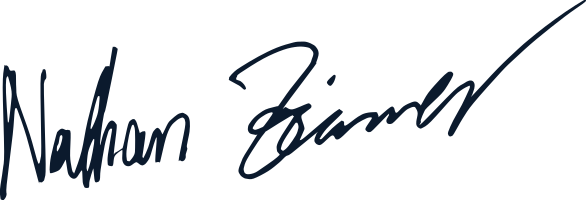
Nathan Zimmer
|